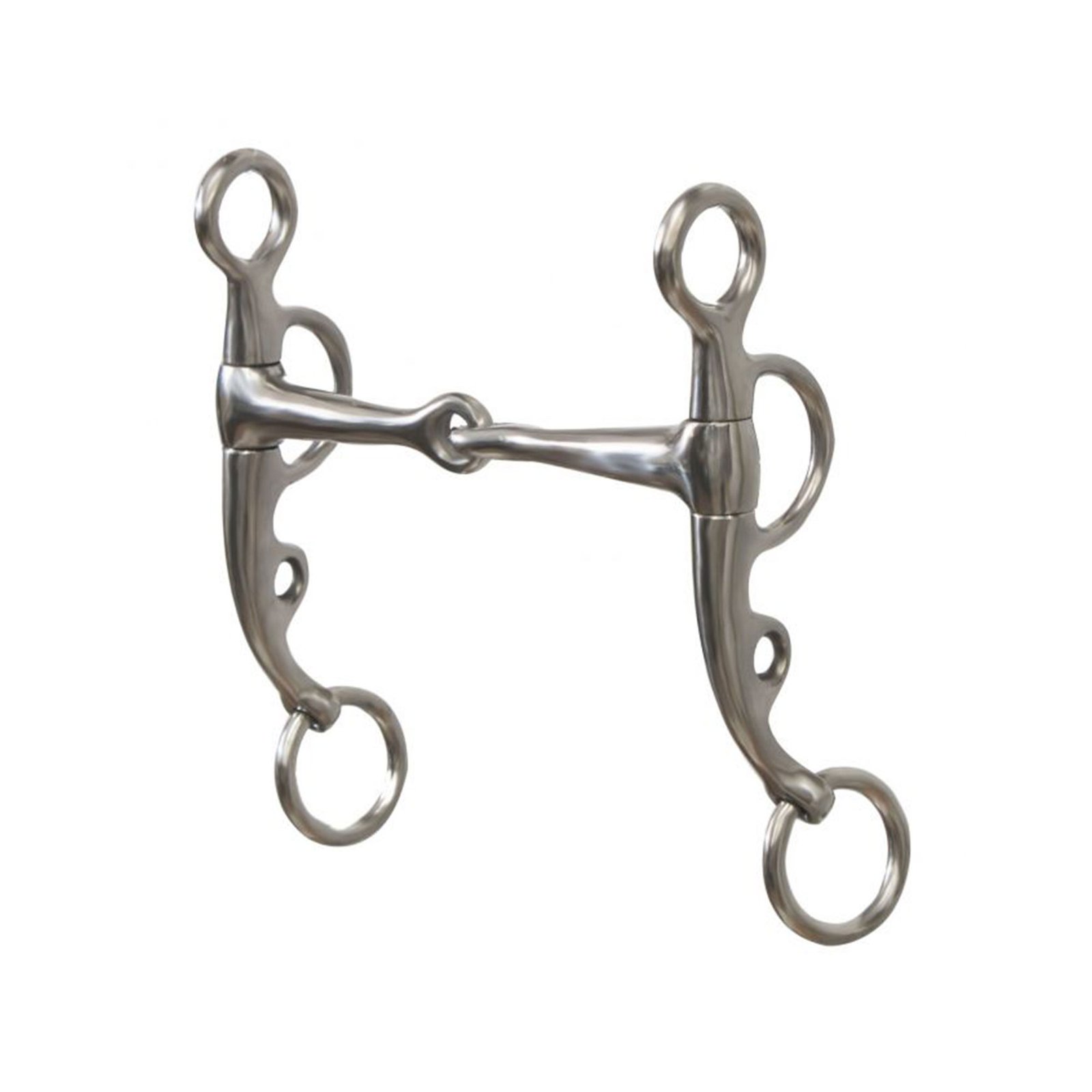
A Pelham bit combines curb and snaffle action into a single mouthpiece, giving riders two rein options through one bit. This Pelham bit design suits horses that need more than a simple snaffle but don’t require a full double bridle setup. It’s a practical middle ground for riders who want flexibility in how they communicate.
A Pelham horse bit uses two sets of reins, one attached at the mouthpiece ring for direct pressure, and one at the shank for leverage. This setup lets a rider blend both types of pressure depending on the situation, adjusting contact without switching equipment mid-ride. It’s a favorite among riders working horses that respond well to varied cues.
At Dead Broke Saddlery, our bits for horses come in multiple mouthpiece styles and shank lengths, so you can find the right balance of leverage and comfort for your horse’s mouth and your riding discipline. From jumpers to trail horses, there’s a fit for different levels of sensitivity and training.
Looking for a Pelham bit for sale that actually fits your horse’s needs? Browse our full selection at Dead Broke Saddlery and find a bit that gives you the flexibility to ride the way your horse responds best. Quality tack starts with the right equipment in hand.